Aia Billing Software For Mac
Filling out the AIA-style G702 and G703 application for payment forms can be a painful process. But hey—you’re a commercial GC or sub, and you want to get paid, right? So you’re going to fight through the painful reconciliation required to fill them out no matter what, even if it means hours lost to administrative process that could have been spent on more important things—like growing your business.
Founded in 1987, Turtle Creek Software is a software organization based in the United States that offers a piece of software called Goldenseal. Goldenseal features training via documentation. The Goldenseal software suite is Mac, and Windows software. Goldenseal offers online, and business hours support. Get reviews, pricing, and demos on the best construction management software. Prices starting from $19/month/user. Compare products like Vista by Viewpoint, Fieldwire, Procore, and more. Reviews on Windows, web-based, Mac, iOS, Android, and Linux systems. Compare our superior products to the AIA ® Forms and Documents. The following Mac programs are available for download: Application for Payment, TS 702 - TS 703 Billing (v.8.5) (Compare to the AIA® Form G702® & Form G703®).
What if there was a software package that made filling out the AIA-style forms easier than you ever thought possible? What if it could do all the reconciliations—including GC-requested change order consolidation—for you?
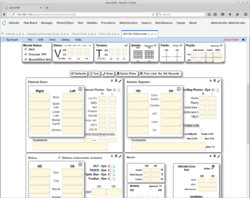
Construction progress billing software for creating Application for Payments. Easy, customizable & automated to meet your needs. Ideal for construction contractors or any organization that needs to submit a progress billing against a contract amount. Ideal for generating schedule of values form. Click here for screen shots or more info.
Well, it’s here and available now. Say hi to Knowify!
#1
Create AIA-style pay applications quickly and easily
#3
Keep all your billing data in one place
Easy pay app builder
Knowify will allow you to complete your applications for payment in under a minute. All Knowify asks is a percentage of completion by line item and/or the dollar value of stored materials, and it does everything else. And with a powerful set of change order management tools (including e-signature), Knowify will handle all the reconciliations for you and ensure that you bill correctly the first time. Take back that wasted time—spend it on running a better, more profitable business—with Knowify!
Professionally looking invoices
Once the application for payment is complete, you can email it to your GC through Knowify. You’ll have access to all your client contacts and you can personalize your emails to make sure they are properly processed.
What Knowify users are saying managing pay appications
“This feature is amazing. It’s something that used to take me eight hours, but I can do it in virtually eight minutes now.”
Owner, Chaney Mechanical
“Absolutely love the built in AIA billing format and the ability to email out of the application. We also use the app in the field to capture and review employee time. It’s very seamless.“
Accounting Manager, Southwest Earthwork
Track retainage throughout the job
Knowify will keep track of the retainage throughout the job, even in cases where the percentage retained changes mid-stream. If you sync with QuickBooks, Knowify will make sure the retainage is properly accounted for by pushing double-sided journal entries as necessary. Once the job is complete, you can include the retainage in the last application for payment or invoice it separately with a regular invoice.
Would you like to see it in action?
Sign up to test-drive Knowify for 14 days. Once the trial expires, you will have the power to decide what plan fits your business requirements better. No card required.
The good news: you’ve landed a huge contract with a ton of potential for profit and growth. The bad news: it requires AIA billing, and you haven’t a clue where to start. You might be asking yourself, “What is AIA billing?” and, “How do I do it?” and, “Do I need specialized AIA billing software?”
First, don’t panic.
Aia Billing Software For Mac 2020
While AIA billing might seem intimidating at first, it’s very manageable with the right tools and processes. In addition, because it is a form of progress billing, there are a lot of benefits to it. In this three-part series, we’ll provide all the answers you need for handling your first AIA job.
OK, What Is Progress Billing?
“Progress billing” simply means that you bill based on your progress on the job. The amount you bill is generally related to the percentage of completed work. It’s calculated using a simple formula of:
In other words, the job is 25% done, and you bill 25% of the contracted amount.
The biggest benefit of progress billing is that you don’t have to wait for arbitrary milestones (or even the end of the job) to bill. Instead, you bill to receive cash on a regular basis. That allows you to more easily control budgets, pay laborers and subcontractors, purchase materials, and manage other debts.
But there are other benefits. Paying in smaller installments is often easier on the customer and allows you to increase the likelihood you’ll be able to collect. It forces regular communication on the progress of a job, and requires you to have a good understanding of what might be going wrong.
The downside is that it’s not as simple as printing a deposit invoice and billing the remainder at the end of the job. Progress billing in any form requires quite a bit more math and accounting. And AIA billing is even more complex.
So, What Is AIA Billing?
The term “AIA” stands for the “American Institute of Architects.” The AIA is a professional organization of more than 90,000 architects, which creates standards for the industry. One of those standards is a set of forms contractors use for a specific style of progress billing, plus the practices around them. That’s what we call “AIA billing.” More accurately, AIA billing is the use of forms G702 and G703 to provide detailed information about the progress on a job.
As a form of progress billing, AIA billing is especially helpful because it standardizes how you bill, what the invoices look like, and the language the parties use. It can expedite payments and reduce the possibility of errors, while helping to ensure that you’re fully compliant with industry standards. Being able to follow AIA billing standards opens opportunities to work on larger projects and bid on government-funded projects.
If you work with forms G702 and G703, there are a few important terms you’ll hear. We’ve explained a few below.
What Is an AIA Application?
AIA form G702 has the official title “Application and Certificate for Payment,” but most people refer to it as simply the “application.” In AIA billing, the architect (or owner or general contractor, in many cases) gets to approve the amount the contractor bills. Therefore, the form isn’t technically an invoice. It’s just an application detailing the amount you’d like to invoice.
Quake 2 3.20 patch download. What Is Retainage?
Also called “retention,” retainage is a percentage of a contract, often 5-10%, that can’t be billed until the entire project is complete and the client has approved the work. This gives the customer recourse in case they aren’t satisfied with the work.
What Is a Schedule of Values
The schedule of values on an AIA form is the detail of work that you plan and complete. You might think of it the same way you’d think of the line items on a detailed invoice. There are lines for each task or type of work involved. Each line item displays the “scheduled value,” (i.e., the cost for that line item agreed upon in the contract) along with how much work the contractor has done to-date on that line item. In construction, we often shorten “Schedule of Values” to “SOV.”
What Is Stored Material?
Ordering materials is a tricky part of budgeting. Materials should be on site for when you need them, but you don’t want to order them too early and tie up cash unnecessarily. In AIA billing, you can bill for materials you’ve purchased for the job even if you haven’t used them yet. Those costs — and the billings for them — are referred to as “stored material.” Sometimes contractors hold a different percentage of retainage on stored materials than the rest of the job.
Sounds Easy Enough. What’s All the Fuss About?
Completing the first AIA billing form on a job is really pretty simple with the right tools. The schedule of values was created during contracting. Afterward, you purchase some materials for the job and complete some of the work. You enter those percentages of completion, do some quick math, and get a total. That doesn’t seem so hard, right?
It’s not. Where AIA billing gets more complex is after that first application.
Remember, you’re not technically invoicing your client at that point. Essentially, you’re asking for permission to invoice them the amount that the G702 indicates. The project owner (or architect or GC, etc.) gets to take a look at those percentages of completion and make sure that they agree with your estimation. If they do, great! You get paid.
If not, they may “red line” the AIA form. In red lining, they’ll make adjustments to your amounts and return the forms to you. You’ll need to make adjustments to your billing system, produce another version of the application, and re-submit it. If you had “posted” the original application as accounts receivable in your accounting system, you’re going to need to deal with the change there.
This gets more complex as the job continues, because your estimated percentage of completion may vary from the project owner’s each time. You’ll need to keep track of the amounts you originally applied for, what you actually billed, and what you got paid for. In addition, you’ll need to update the “previous applications” amount every time you bill and add the new application amount.
What About Stored Material and Retainage?
If you bill for stored materials, you’ll need to remember not to double-bill. For example, let’s say your scheduled value for an item was $10,000 and your first application billed for $2000 in stored materials. Later, an application that shows 100% complete for that line item wouldn’t mean billing $10,000 that time. It actually means billing $8,000 (100% of the remaining total).
Obviously, you don’t usually go from 0% to 100% on a single billing, so that same principle applies regardless of what percentage of completion you are using.
Retainage is a bit more complicated. Even though you don’t bill retainage until the very end, you should recognize it as a separate receivable amount while the job progresses. That means that you’re “holding” retainage on an ongoing basis. Take our $10,000 line-item example and assume there is 5% retainage on it. If you’re 10% complete with that item, you would bill $950 and hold $50 in retainage.
If you were to bill another 10% of that line item on each application, another $50 would be held in retainage each time. At the end, when you’re 100% complete, you’d have $9,500 billed and $500 in retainage.
As you near the end of the job, you “release” the retainage — which usually makes up the final billing. Whether you release retainage one line item at a time or all at once, it then becomes a true receivable amount.
OK, Let’s Do This AIA Billing! But . . . How?
Aia Billing Software For Mac Free
Armed with this basic knowledge about the principles of AIA billing, it’s certainly possible to purchase forms from the AIA and start filling them out. However, AIA billing software that’s fully integrated with your accounting software can certainly make things easier. In part two of this series, we’ll show you exactly what an AIA form looks like and how to fill it out. In part three, we’ll walk you through how to do it in FOUNDATION® and show you the benefits of using construction accounting software that has built-in AIA billing tools.
Aia Billing Software For Contractors
So, in the meantime, congratulations on winning that job that requires AIA billing software! You’ve got this!